
After the meeting
Every recording is kept in History with its transcript and a summary written on your computer.
History
History lists every recording. Search finds the exact words first; when they find too little, it adds passages that say the same thing in other words, marked as similar.
Summaries
When a recording ends, Stenograf writes its summary with the local language model, in the template the meeting calls for: General (decisions, actions, open questions, what was discussed), Standup, 1:1, Sales call, Interview, Retro or planning, or Lecture. It picks the template from the calendar invitation when it can. Every point ends with the time it came from, and selecting it opens that moment.
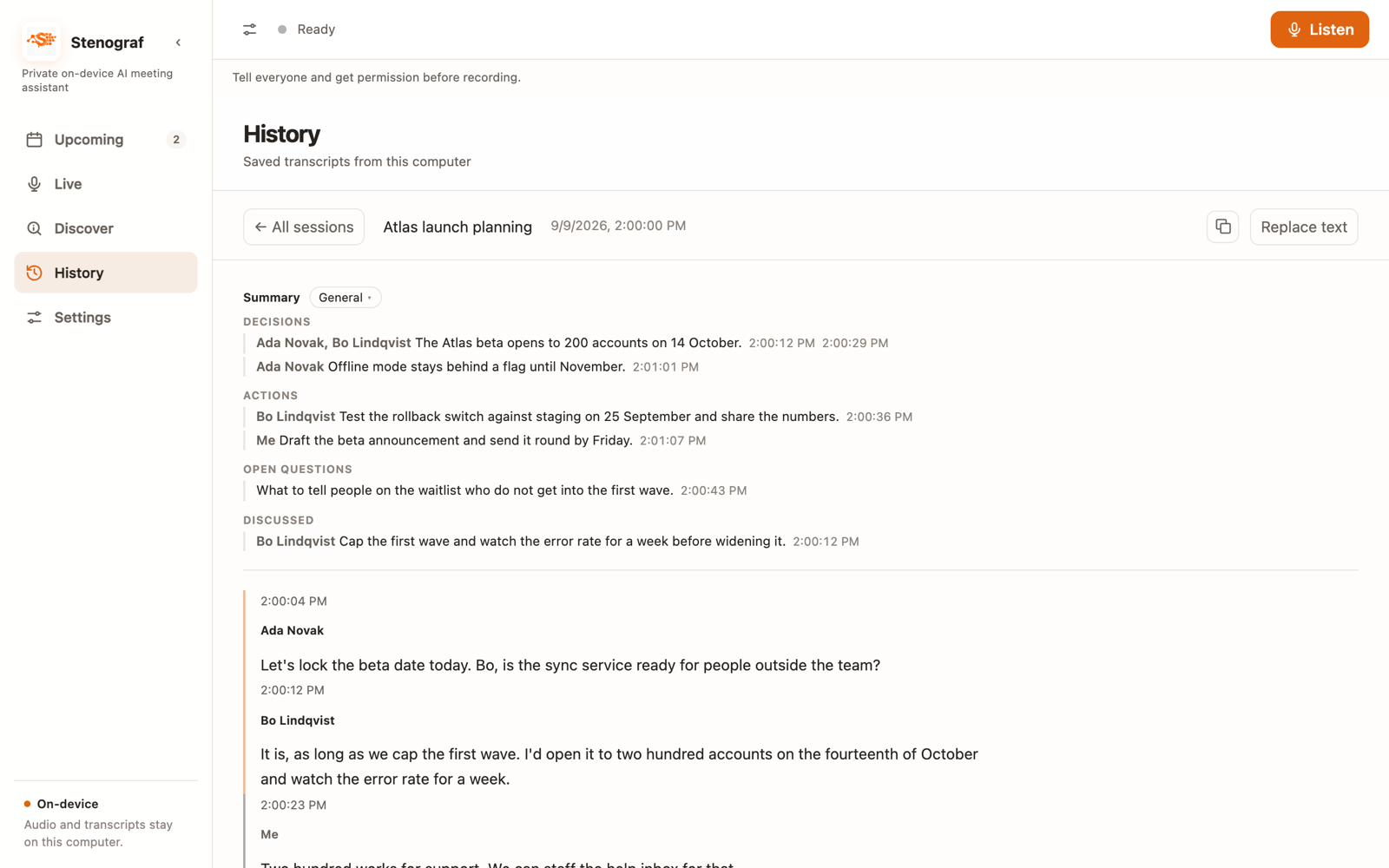
To use another template, pick it on the summary and choose Regenerate. In Settings → Local AI → Summary template you can set the default, duplicate a built-in template, or write your own.
Fix the transcript
Edit paragraph corrects one paragraph. Replace text fixes a word everywhere in the recording at once — useful when a company name was misheard the same way throughout. The summary and search follow your correction.
While you record
Live assistance can keep a running summary or follow the agenda you wrote for the meeting, and Translate into shows each final line in another language. Both run on your computer, and the translation is only a view: Stenograf still saves and searches the original words.
Summaries, Discover, translation and Live assistance all use one local language model. Setting it up is described on the Discover page.